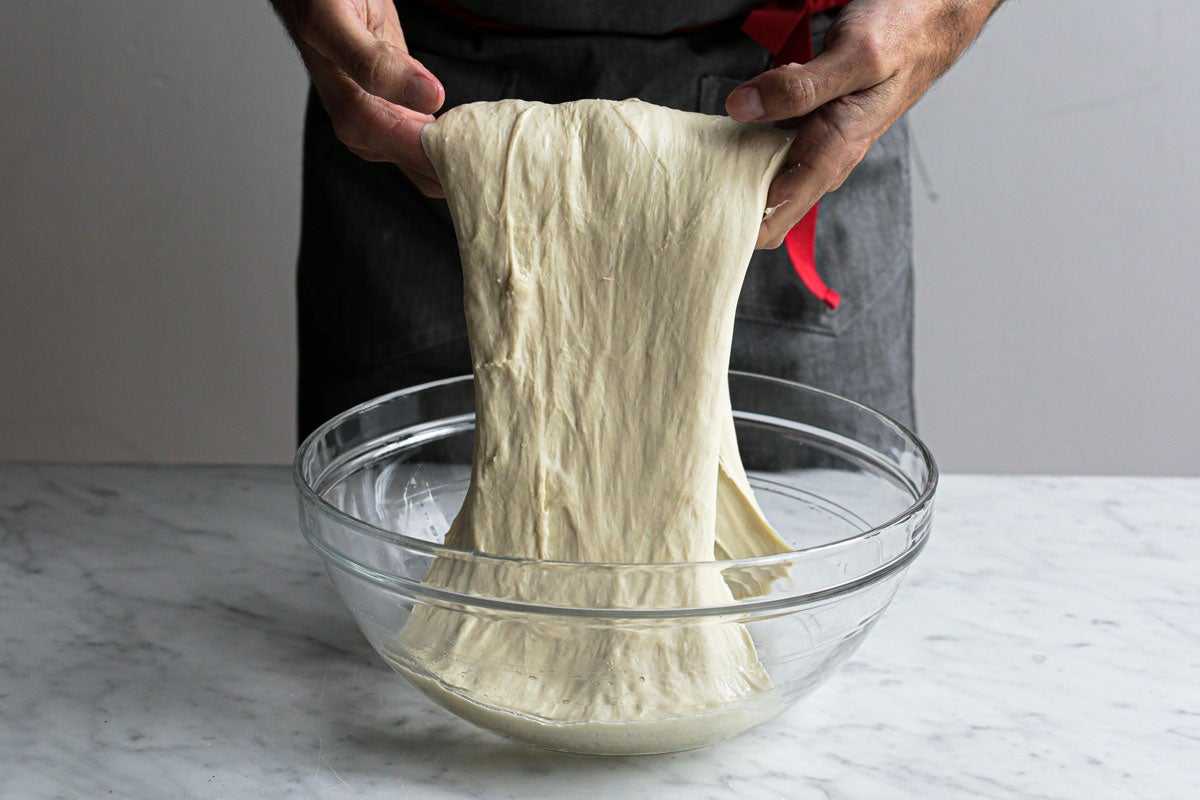
For the first two years I baked bread, I had no idea what hydration meant. I just followed recipes. Some doughs were stiff and easy to handle. Others were sticky messes that stuck to my hands and the counter and everything they touched. I thought I was doing something wrong. Turns out I was just making different types of bread.
Hydration is simply the amount of water relative to the amount of flour. A dough with 500 grams of flour and 325 grams of water has 65% hydration. That's a nice, manageable dough. A dough with 500 grams of flour and 425 grams of water has 85% hydration. That's a wet, sticky, advanced dough. The difference is huge.
Once I understood hydration, everything changed. I stopped being confused by sticky dough. I started choosing recipes based on the texture I wanted. I could look at a bread formula and know exactly how it would behave before I mixed a single ingredient.
Here's the basic spectrum. Low hydration, around 50-60%, gives you stiff dough. Think bagels, pretzels, pasta dough. These are easy to handle. They don't stick to your hands. You can roll them out without flour. But the crumb is dense and tight.
Medium hydration, 60-70%, is where most sandwich breads and dinner rolls live. The dough is firm but workable. It might stick a little, but a light dusting of flour fixes it. The crumb is soft and even. This is the sweet spot for beginners.
High hydration, 70-80%, is for artisan breads like sourdough, ciabatta, and focaccia. The dough is soft and sticky. You need wet hands or a bench scraper to handle it. But the reward is an open crumb with big irregular holes and a crispy crust.
Very high hydration, above 80%, is for advanced bakers. Think of pan de cristal or certain rustic Italian loaves. The dough is almost like a batter. You can't shape it by hand. You have to pour it into the pan. The crumb is extremely open and the crust is thin and crackly.
I spent years avoiding high hydration doughs because they frustrated me. Then I took a class with a baker who specialized in ciabatta. She showed me that sticky wasn't bad. It was just different. You handle it with wet hands instead of floured hands. You use a bench scraper instead of your palms. You let the dough do the work.
The scaling implications of hydration are straightforward but important. When you scale a bread recipe, the hydration percentage stays the same. If your original dough is 65% hydration, your scaled dough is also 65% hydration. That part is linear. But here's the catch. Different flours absorb water differently. Whole wheat flour needs about 5-10% more water than white flour. Rye flour needs even more. So if you scale a recipe that uses white flour, but you substitute whole wheat, you have to adjust the hydration.
I learned this when I tried to make whole wheat sandwich bread using my white bread formula. The dough was so dry it wouldn't come together. I added water little by little until it felt right. I ended up adding about 8% more water. That became my whole wheat hydration baseline.
The other catch is that hydration interacts with other ingredients. Fat softens the dough and makes it feel more hydrated than it actually is. A brioche with 60% hydration and 40% butter feels like a 70% hydration dough because the butter lubricates everything. Sugar also affects texture. So when you scale an enriched dough, don't just look at the water percentage. Look at the total liquid and fat.
I once scaled a brioche recipe from 500 grams of flour to 2,500 grams. I kept the hydration at 60%. But I forgot that the butter also contributed moisture. The dough came out too wet because the butter scaled linearly and added more softness than expected. I had to add extra flour to fix it. Now I reduce hydration slightly when scaling enriched doughs. Maybe 2-3% less water for every doubling.
Temperature affects hydration too. In hot weather, flour absorbs more moisture from the air. Your dough will feel wetter even if you use the same amount of water. In dry weather, the opposite happens. I keep a spray bottle near my mixer. If the dough looks dry, I spray a little water. If it looks wet, I add a sprinkle of flour. That's not precise, but it works.
For professional bakers, they adjust hydration based on the day's humidity. Some add or subtract 1-2% water depending on the weather. At home, you can be looser. A few grams either way won't ruin your bread.
The most important thing I learned about hydration is that it's a tool, not a rule. You can change it to get different results. More water means a more open crumb and crispier crust. Less water means a denser crumb and softer crust. You can take a basic recipe and adjust the hydration to make bagels one day and ciabatta the next. Same flour, same salt, same yeast. Just different amounts of water.
I tested this once with a simple formula. 500 grams flour, 10 grams salt, 5 grams yeast. I made three batches. One at 55% hydration, one at 65%, one at 75%. The 55% batch made great bagels. The 65% made excellent sandwich bread. The 75% made a delicious ciabatta. Three completely different breads from the same ingredients. That's when I fell in love with hydration.
When you scale a recipe across different hydrations, the math is simple. Just multiply your flour weight by the target hydration percentage. If you have a 1,000 gram flour recipe at 65% hydration and you want to try 70%, add 50 grams of water. That's it. No need to scale everything else. The flour, salt, yeast stay the same. Only water changes.
I do this all the time now. I have a master dough formula that I adjust based on what I'm making. 60% for rolls. 65% for loaves. 70% for pizza. 75% for focaccia. The same dough, just wetter or drier.
The tool I use for scaling bread recipes is the same one I use for everything.
The tricky part is when you add preferments like sourdough starter or poolish. A sourdough starter at 100% hydration contains equal weights of flour and water. So when you add 200 grams of starter to your dough, you're adding 100 grams of flour and 100 grams of water. That counts toward your total hydration.
Let me give you an example. You want a final dough with 1,000 grams total flour and 70% hydration. You're using 200 grams of 100% hydration starter. The starter contributes 100 grams of flour and 100 grams of water. So you need to add 900 grams more flour. For water, 70% of 1,000 is 700 grams total water. The starter gave you 100, so you need to add 600 grams more water. Plus salt and whatever else.
That math is easy once you get used to it. But it tripped me up for years. I would add the starter on top of my calculated water and end up with dough that was too wet.
Now I do the subtraction first. Write down your target total flour. Write down your target total water based on your desired hydration. Subtract what's coming from your starter. The remainder is what you add.
The other thing about hydration and scaling is that larger dough masses behave differently. A 2 kilogram dough ball will ferment faster than a 500 gram ball because it holds heat better. That means you might need to reduce your hydration slightly for very large batches, or shorten your bulk fermentation time.
I made a 5 kilogram dough once for a pizza party. I used my standard 65% hydration. The dough was so soft and sticky that I couldn't shape it. I had to add flour during shaping, which messed up the final texture. Next time, I'll drop the hydration to 62% for large batches.
Every baker has their own adjustments. You'll develop yours over time. Start with standard hydration numbers and adjust based on how the dough feels. Too stiff? Add water next time. Too sticky? Reduce water.
The most important thing is to record what you do. I have a notebook page for each type of bread I make. At the top, I write the target hydration. Below, I write notes about how the dough behaved. "65% was too dry for this flour. Try 68% next time." That notebook is worth more than any cookbook.
If you're new to bread baking, start at 65% hydration. It's forgiving. It won't glue itself to your hands. You can knead it on a lightly floured surface without disaster. Once you're comfortable, try 70%. Then 75%. Each step teaches you something new.
And remember, sticky dough is not bad dough. It's just dough that needs different handling. Wet your hands. Use a bench scraper. Trust the process.
My best loaf of bread came from an 80% hydration dough that I almost threw away because it was so sticky. I stuck with it. I folded it every 30 minutes instead of kneading. I shaped it with wet hands and a lot of patience. It baked into the most beautiful, airy, crispy loaf I've ever made.
That's the magic of hydration. It's not about making things easier. It's about understanding what's happening in your dough and working with it instead of against it.
— Olivia
P.S. My 12-year-old now asks what hydration percentage I'm using before she'll agree to help me bake. She says she doesn't like sticky dough. She's her mother's daughter.