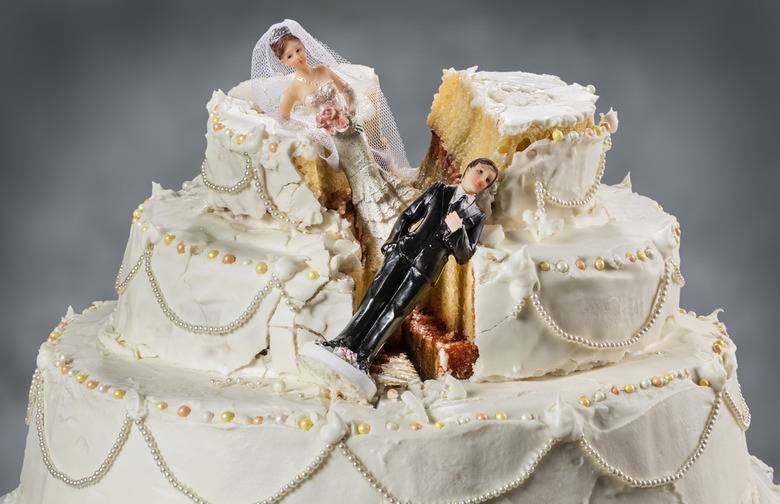
It was maybe 4:30 in the morning—I don't remeber exactly because I'd stopped looking at the clock after the third hour. The hotel kitchen was that weird kind of quiet you only get at 2 a.m., when the dishwashers have gone home and the night prep team hasn't shown up yet. I was standing in front of a walk-in cooler door, holding a half-eaten piece of wedding cake that tasted like soap and regret.
The cake was supposed to feed 200 people. The bride's mother had called three days before, panic in her voice: "Olivia, we added fifty more guests. Can you just multiply everything?" I said yes because that's what you do when you're a pastry chef and someone's about to cry. I said yes because I thought I knew the math.
I didn't know the math. Not really.
Let me back up.
The Job That Looked Simple on Paper The original recipe was my standard vanilla wedding cake—the one I'd made maybe 200 times before. Twelve servings. 360g (12.7oz) cake flour. 300g (10.6oz) sugar. 340g (12oz) butter. Six eggs. And here's the part that would ruin my life: 2 teaspoons of baking powder.
The math seemed easy. 200 servings ÷ 12 servings = 16.67 scaling factor.
Multiply everything by 16.67. Done.
I pulled out my calculator—the same one I still use today, a battered Casio with a cracked screen—and started multiplying.
360g flour × 16.67 = 6,001g (211.7oz) of cake flour. That's about 13 pounds. 300g sugar × 16.67 = 5,001g (176.4oz) sugar. Eleven pounds. 340g butter × 16.67 = 5,667g (200oz) butter. Twelve and a half pounds. Six eggs × 16.67 = 100 eggs.
And 2 teaspoons baking powder × 16.67 = 33.3 teaspoons.
That's about 2/3 of a cup of baking powder.
I should have stopped right there. I should have looked at that number—33 teaspoons—and thought, "Wait, that seems wrong." But I was tired. The wedding was in two days. The bride's mother kept calling. I just wanted to get the batter mixed and the layers in the oven.
So I kept going.
The First Sign of Trouble I started mixing at 10 p.m. after the dinner service ended. The hotel kitchen was empty except for the overnight janitor who nodded at me from across the room. I had three Hobart mixers running simultaneously because my largest bowl couldn't hold 13 pounds of flour.
The batter looked… wrong. It was too pale. Too thick. When I tasted it—and I always taste my batters, that's a non-negotiable rule—my tongue went numb.
Not numb like "too much sugar" numb. Numb like "I just licked a battery" numb.
I ignored it. "It'll bake out," I told myself. "The heat will change the chemistry."
It will not bake out. I know that now. I knew it then, too, but I didn't want to admit it.
I poured the batter into the pans—sixteen 12-inch rounds, four 10-inch rounds, and a bunch of 8-inch rounds because I ran out of the bigger pans. The batter rose beautifully in the oven. Beautifully. That should have been my second warning.
Normal cake batter doesn't rise beautifully when you've multiplied baking powder by 16.67. Normal cake batter rises aggressively—it domes and cracks and sometimes spills over the edges.
But I was already cleaning the mixing bowls when I smelled it.
2 a.m. and Everything Fell Apart The smell hit me first. Not vanilla. Not butter. A sharp, chemical smell—like ammonia mixed with soap.
I pulled the first 12-inch round out of the oven. The top was dark brown—almost black—but when I touched it, the cake felt… hollow. Too light. I turned it out onto a cooling rack, and that's when it happened.
The cake collapsed.
Not crumbled. Not cracked. Collapsed. The whole center fell inward like someone had punched it. The edges stayed standing—a weird, sad ring of cake surrounding a crater of underbaked, chemically-tasting disaster.
I stood there holding the empty pan, staring at the wreckage on the cooling rack.
Then I pulled out the next pan. Same thing. The next. Same thing. All sixteen 12-inch rounds had collapsed. The 10-inch rounds? Collapsed. The 8-inch rounds? Somehow even worse—they'd exploded upward, then caved in on themselves, creating these mushroom-shaped cake fossils that looked like something from a science experiment gone wrong.
It was 2 a.m. The wedding was in 36 hours. I had 200 people to feed and zero edible cake.
I sat down on the kitchen floor—right there on the tile, next to a stack of dirty mixing bowls—and I cried.
The Moment I Became a Math Person Not a dramatic cry. Not a sob. Just tears running down my face while I stared at the ceiling and thought about how I was going to tell the bride's mother that I'd ruined her daughter's wedding cake.
Then I got angry.
I grabbed my calculator and the recipe. I started writing down every number, every conversion, every step I'd taken. And that's when I saw it.
Baking powder doesn't scale linearly.
I didn't have a formula for it yet—that would come later, after weeks of testing and reading and failing—but I understood the problem intuitively. Leavening agents don't work like flour or sugar. They're not just "more ingredients = more rise." They're chemical reactions, and chemical reactions have limits.
Too much baking powder = too much carbon dioxide = too many bubbles = bubbles merge and pop and the whole structure collapses.
The formula I eventually developed—after maybe 40 test batches and a lot of ruined cake—is this:
Leavening_new = Leavening_original × (Scaling_Factor^0.75)
For my 16.67x scaling factor: 16.67^0.75 = about 8.2
So instead of 33.3 teaspoons of baking powder, I should have used: 2 tsp × 8.2 = 16.4 teaspoons
That's half the amount. Half.
No wonder the cake collapsed. I'd doubled the leavening without realizing it.
The Emergency Fix (4 a.m. to 6 a.m.) I had 100 eggs left, maybe 6 pounds of butter, and a fresh bag of flour that hadn't been contaminated by the first batch. I recalculated everything—the right way this time.
Corrected recipe for 200 servings (leavening adjusted):
Cake flour: 6,001g (211.7oz) — same as before (flour scales linearly)
Sugar: 5,001g (176.4oz) — same as before
Butter: 5,667g (200oz) — same as before
Eggs: 100 — same as before
Baking powder: 16.4 tsp (about 1/3 cup + 1 tsp)
The batter looked right this time. Pale yellow, smooth, normal thickness. When I tasted it, my tongue didn't go numb. It tasted like vanilla and butter and sugar—exactly how it was supposed to taste.
I baked the first test batch at 4:15 a.m. One 12-inch round. Thirty-five minutes in the oven at 350°F (175°C).
When I pulled it out, the top was golden brown. Not dark. Not black. I turned it onto the cooling rack and held my breath.
It didn't collapse.
I touched the center. Firm. Springy. A normal cake.
I cut a slice and tasted it. Perfect. Maybe even better than the original—the crumb was slightly tighter, more even, because the leavening was balanced.
I baked the rest of the layers in assembly-line style. Sixteen 12-inch rounds, baked in four batches because my oven could only fit four at a time. Then the 10-inch rounds. Then the 8-inch rounds. Each batch took 35 minutes. I timed it so that while one batch baked, I was prepping the next batch of pans.
At 5:45 a.m., the last layers came out of the oven. I stacked them on cooling racks, three layers high, because I'd run out of counter space. The kitchen smelled like vanilla and butter and victory.
At 6:15 a.m., the morning pastry chef walked in and found me sitting on the floor again—but this time I was eating a slice of cake, smiling, covered in flour.
"You look terrible," she said.
"I just saved a wedding," I said.
What I Learned (The Math You Need to Know) That night—that 2 a.m. collapse—changed everything about how I scale recipes. I stopped thinking of scaling as "multiply everything by the same number." I started thinking of it as the math (not "conversion," never "conversion"—scaling is math, not translation).
Here's what the math taught me:
- Leavening scales sub-linearly.
Baking powder, baking soda, yeast—none of them scale at 1:1. The formula I use now is:
Baking soda/powder: multiply by (scaling_factor^0.75)
Yeast: multiply by (scaling_factor^0.85)
For a 2x recipe: baking powder × 1.7 (not 2) For a 3x recipe: baking powder × 2.3 (not 3) For a 4x recipe: baking powder × 2.8 (not 4)
- Salt scales differently, too.
Salt perception is logarithmic, not linear. Double the salt doesn't taste double salty—it tastes four times as salty. I scale salt at (scaling_factor^0.85).
- Spices and intense flavors need the same treatment.
Cinnamon, cloves, cardamom, cayenne—these overwhelm a scaled recipe if you multiply them linearly. I use (scaling_factor^0.85) for spices, same as salt.
- Everything else scales linearly.
Flour, sugar, butter, milk, eggs, oil, water—these scale at 1:1. No adjustment needed. (Well, eggs get tricky when you need half an egg. Round up. Always round up.)
The Tool That Saves You From My Mistake I built the Recipe Scaling Calculator specifically to solve this problem. It handles the leavening math automatically—you just enter your original yield and desired yield, and it tells you exactly how much baking powder, baking soda, or yeast to use.
The Happy Ending (and Why I'm Telling You This) The wedding cake made it to the venue at 7:30 a.m. the day of the wedding. The bride's mother cried—but happy tears this time. The bride never knew anything went wrong. She ate her cake, smiled for photos, and danced until midnight.
I went home at 8 a.m., slept for four hours, then came back to the hotel to break down my station. The collapsed cakes were still in the trash. I pulled one out—just to look at it—and laughed.
That cake taught me more than any textbook. It taught me that scaling isn't multiplication. It's chemistry. It's math. It's understanding what happens when you push a recipe past its limits.
I tell this story on the first day of my culinary math class every semester. The students laugh at the part where I sat on the floor crying. Then they get quiet when I show them the formula and explain that leavening scaling is the number one reason home bakers fail at large batches.
"You're not bad at baking," I tell them. "You just didn't know the math."
Now you do.
Quick Reference: Leavening Scaling Factors Scaling Factor Baking Powder/Soda Multiplier Yeast Multiplier 1.5x 1.3x 1.4x 2x 1.7x 1.8x 3x 2.3x 2.5x 4x 2.8x 3.1x 5x 3.3x 3.7x 6x 3.8x 4.2x 8x 4.8x 5.3x 10x 5.6x 6.3x 16.67x (my disaster) 8.2x 9.8x The formula if you want to calculate it yourself: Leavening_new = Leavening_original × (Scaling_Factor^0.75) for baking soda/powder Leavening_new = Leavening_original × (Scaling_Factor^0.85) for yeast
One More Thing Before You Go That 2 a.m. collapse was 10 years ago. I've scaled hundreds of recipes since then—wedding cakes for 300, birthday cookies for 50, Thanksgiving dinners for 40—and I haven't had a single leavening disaster since I started using the math.
But I still get nervous every time I open the oven on a scaled batch.
That's the thing about baking. You never stop being afraid of collapse. You just get better at preventing it.
— Olivia
"I had a client named" recipeportions.com35#02 | How I Scaled a 12-Serving Recipe to Feed 200 Without Math PanicV3.32500-30002-3